Field Operations & Project Controls
Logistics Is the Job: Why Planning Wins Before the First Pick
Anyone can stand steel on a good day. The projects that finish safe, on time, and on budget are the ones where the site was planned like a machine before the first truck rolled through the gate.
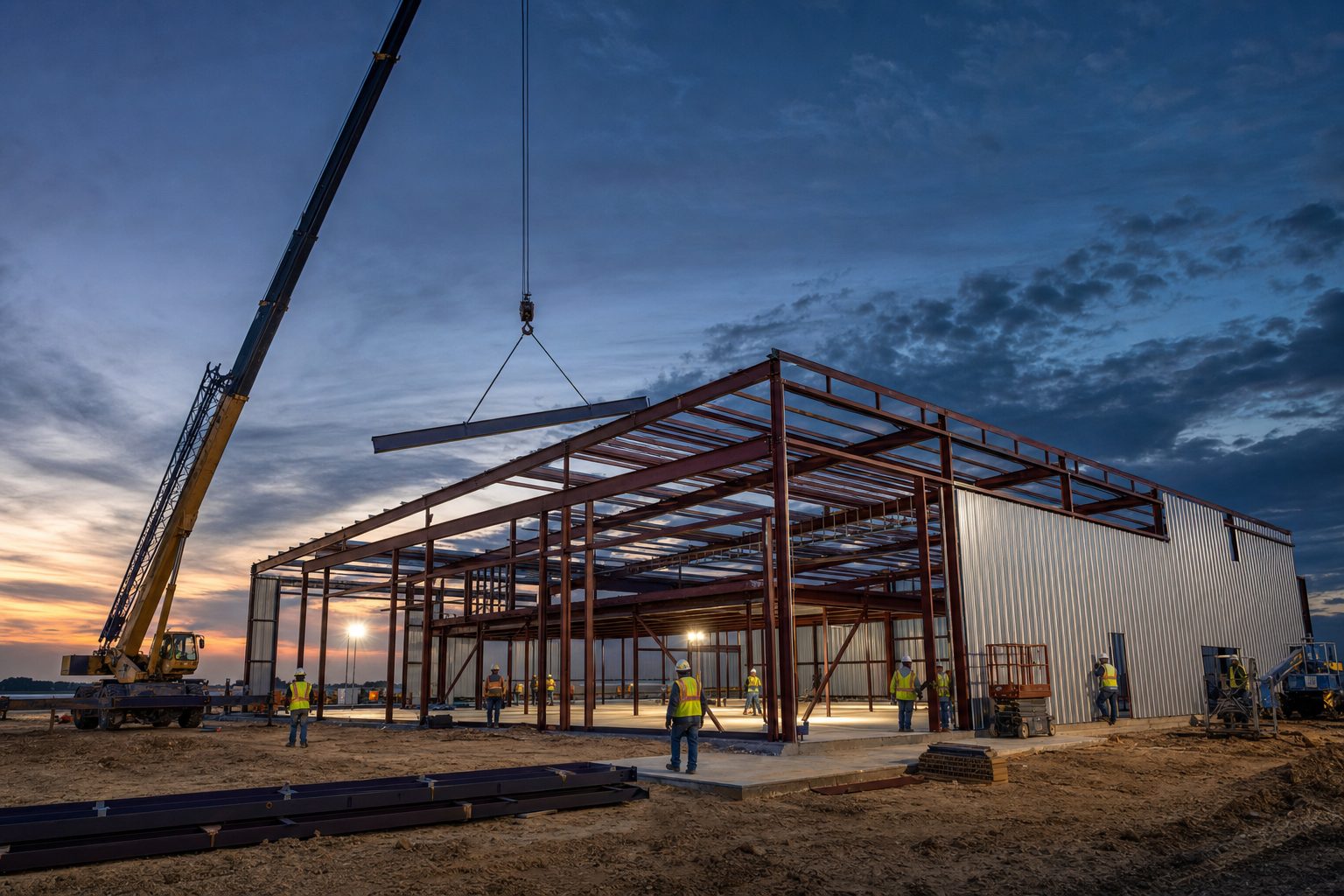
I've spent my career on jobsites, from concrete crews with my father to heavy industrial work on the Gulf Coast, and the lesson has never changed: the work itself is rarely what slows a project down. What slows a project down is everything around the work. The delivery that shows up before the pad is ready. The crane that has to move twice because the laydown yard was put in the wrong place. The inspection that gets missed because nobody sequenced it against the pour.
None of those are craft problems. They're planning problems. And on a commercial job, planning problems cost more than anything a crew can do wrong with a tool in their hand.
The Site Is a System, Not a Yard
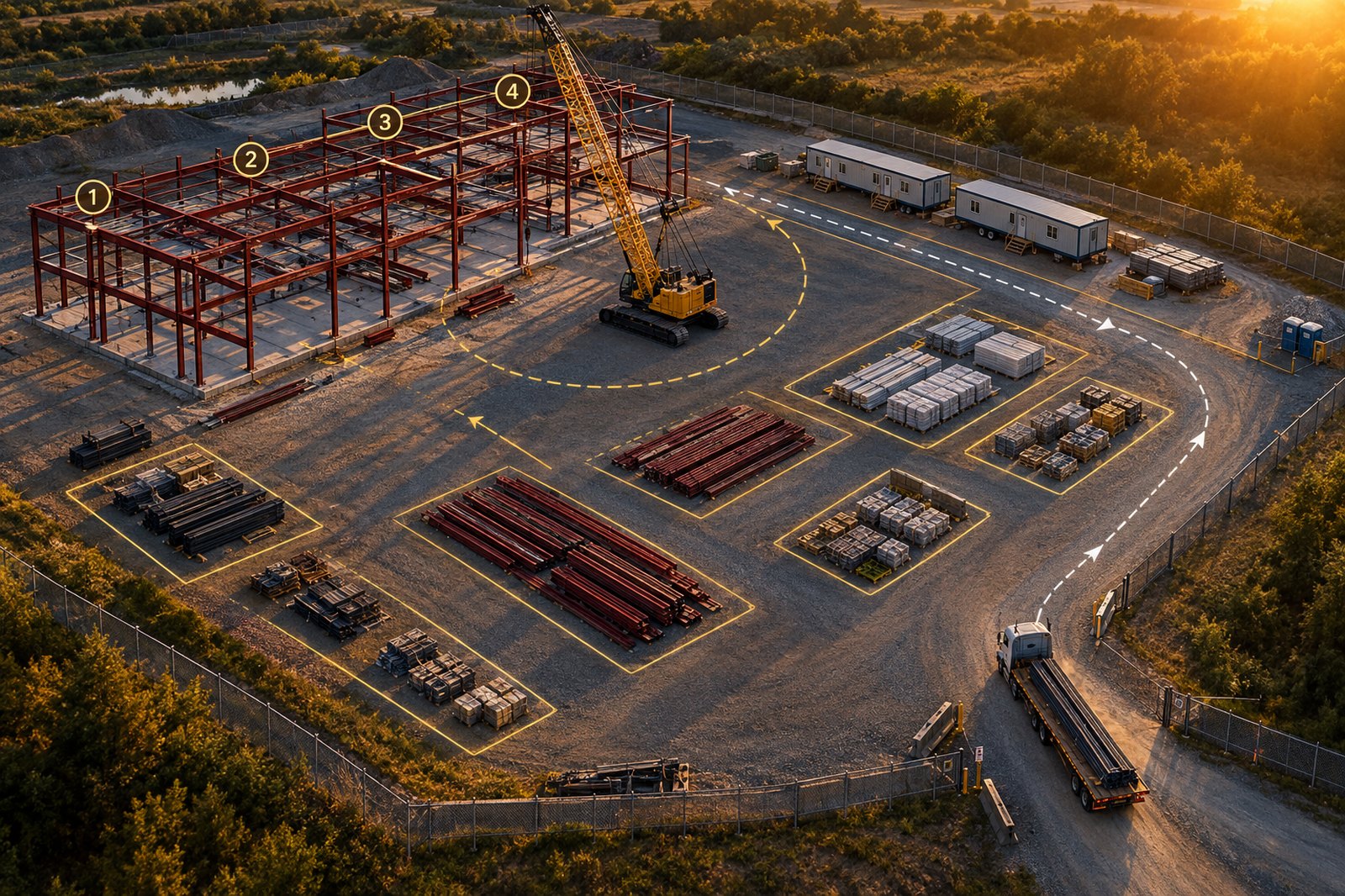
Before we mobilize, we draw the site the way it will actually run. Where the gate is and how a 53-foot flatbed gets in, turns around, and gets out without blocking anyone. Where the crane sits so its swing radius covers the frame without picking over the office trailers or the neighbor's property. Where steel bundles land so they're pulled in erection order, not dug out of a pile. Where concrete trucks queue so the pump isn't waiting on the next load.
That drawing becomes the site logistics plan, and everyone who sets foot on the project works from it: our crews, every trade partner, every supplier, and the owner's people. When the plan is right, the site feels calm even when it's busy. When it's wrong, you can feel it the first morning.
Sequencing Beats Speed
Owners often ask how fast we can go. The honest answer is that speed is a byproduct of sequence. A job moves quickly when each trade arrives to a site that is ready for them, with their material staged, their area clear, and the prior work inspected and signed off. It stalls when we chase productivity by stacking trades on top of each other.
That's why we run a rolling three-week look-ahead schedule against the master CPM schedule. Every week we walk it with the trades: what has to be complete for you to start, what inspections sit between us and that milestone, what long-lead material is on a truck versus still in a shop. If a delivery slips, we know ten days out, not the morning of, and we re-sequence before it becomes a delay claim.
A crane that waits costs the same per hour as a crane that picks. Planning is how you make sure it picks.
What Proper Planning Looks Like on Our Jobs
- A site logistics plan before mobilization. Gates, haul routes, crane positions and swing radii, laydown and staging zones, temporary utilities, and the safety perimeter, all drawn and shared with every trade.
- Procurement tied to the schedule. Steel, joists, deck, overhead doors, and mechanical equipment are released and tracked against the dates they're actually needed, with delivery windows coordinated to the laydown plan.
- An inspection matrix. Every required inspection is mapped to the activity it gates, so nothing is covered up before it's signed off and no crew stands idle waiting on a reviewer.
- Weekly trade coordination. Look-ahead reviews, constraint logs, and a clear owner for every open item. Problems get surfaced on a Tuesday, not discovered on a Friday.
- Daily documentation. Logs, photos, manpower, and deliveries recorded every day, so the record is there when a question comes up months later.
Safety Is a Planning Outcome
The safest sites I've worked on were never the ones with the most signage. They were the ones with the best plan. When traffic has a defined route, when the crane has a clear swing zone, when material isn't stacked in walkways because there was nowhere else to put it, most of the hazards never get created in the first place. We plan for safety the same way we plan for schedule, because on the ground they're the same discipline.
Why It Matters to You
If you're an owner or developer, logistics and planning show up in three places you care about: a schedule you can trust, a budget that holds, and a jobsite you're not embarrassed to bring your tenants or your lenders to. Those aren't things a contractor delivers at the end. They're decided in the weeks before mobilization and protected every week after.
That's the part of the job I take the most pride in. Anyone can build when everything goes right. We plan so that most things do.
Planning your next build?
We'll walk your site, talk through phasing and logistics, and show you what a realistic schedule looks like before you commit to one. Preconstruction consultations are free.
Start a Project
Rudy Ramirez
Partner and Construction Manager at GRAMS Construction, LLC. Rudy leads field operations, scheduling, and trade coordination across the company's metal building, concrete and sitework, and commercial interiors projects in Texas, drawing on a background in concrete and heavy industrial construction on the Gulf Coast.