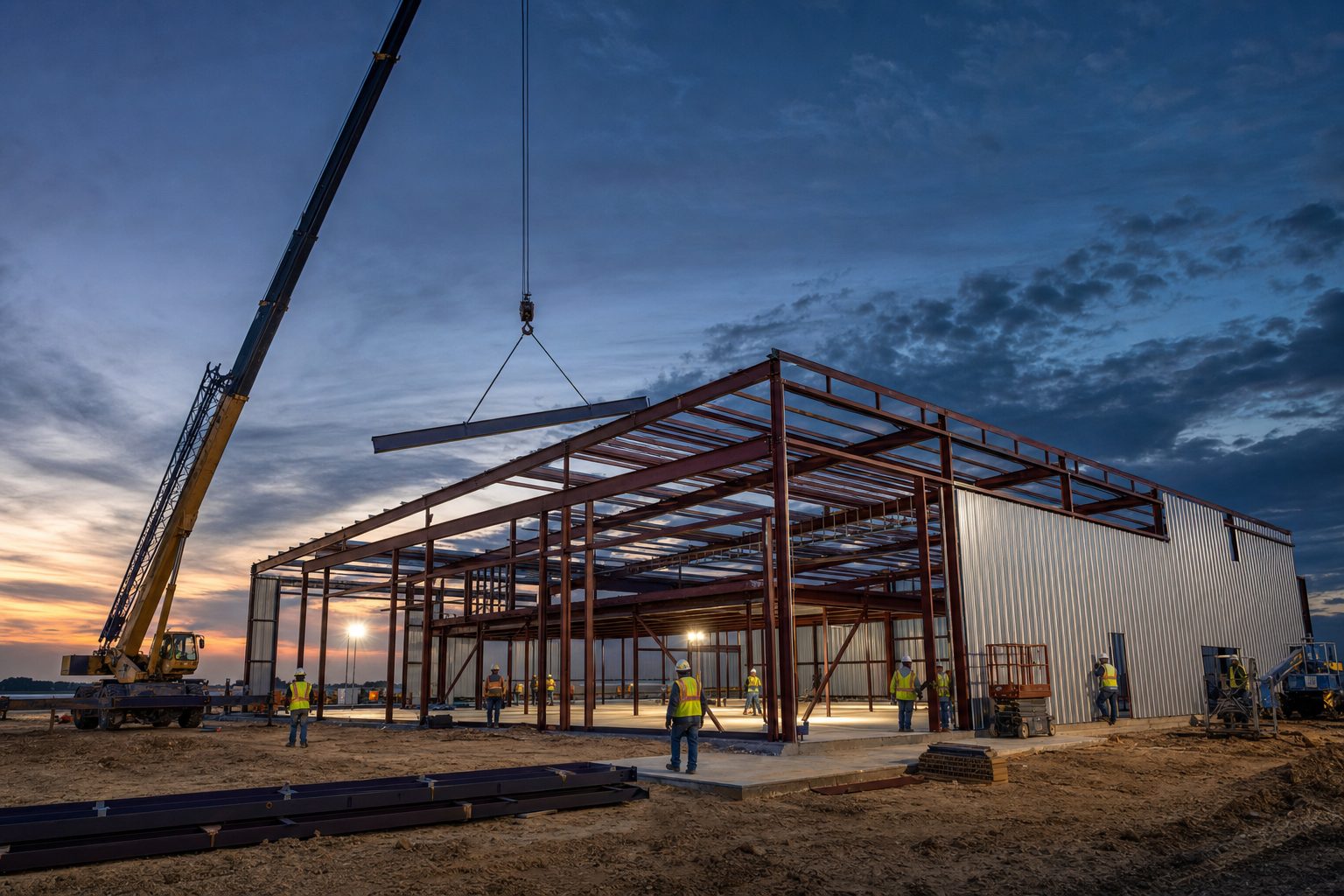
Delivery Methods
The Design-Build Process, in Plain English
One contract. One team. One point of accountability from the first sketch to the certificate of occupancy. Here is how a design-build project actually runs when we deliver it.
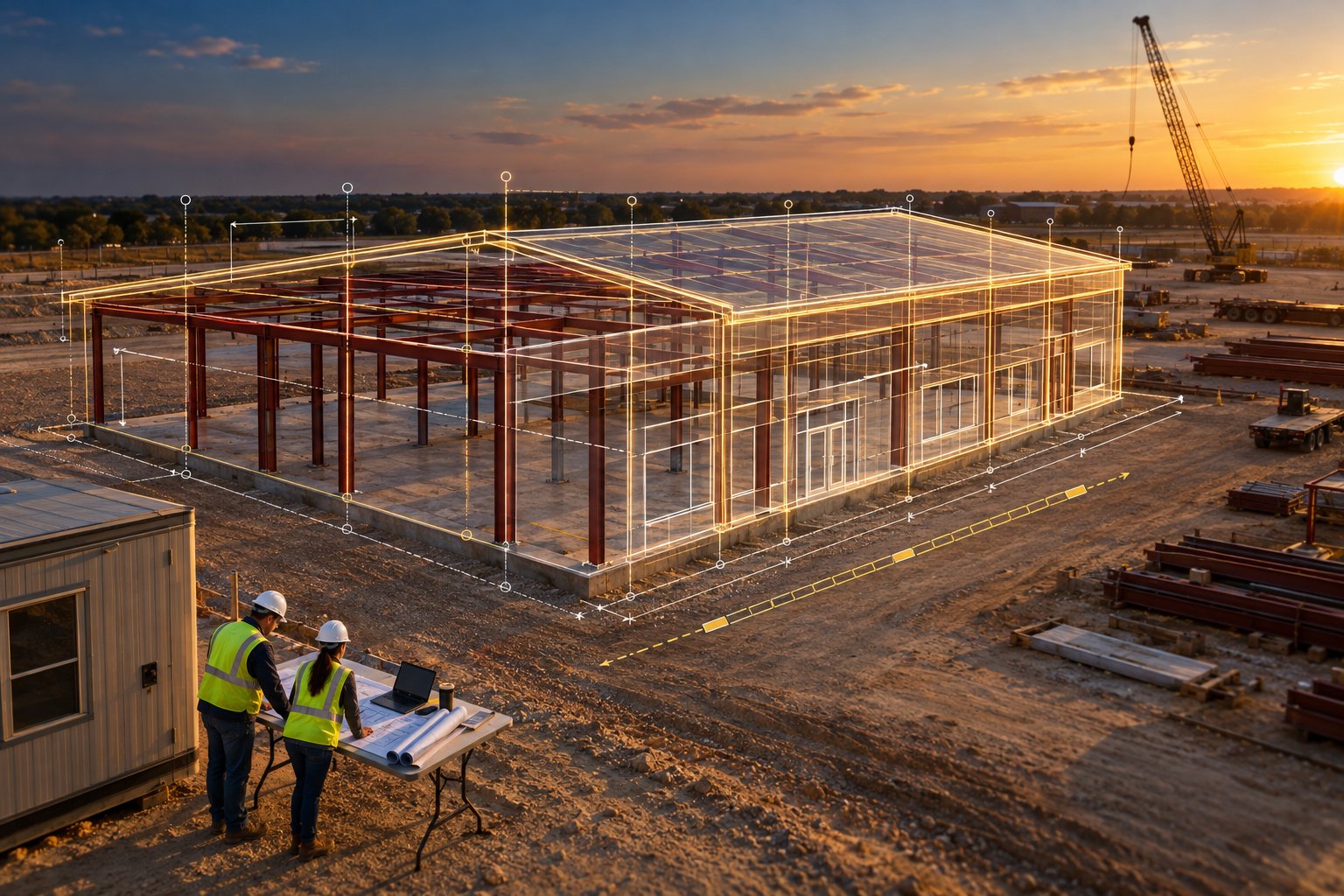
On most commercial projects, the owner ends up refereeing a fight they never wanted to be in. The architect blames the plans that changed. The contractor blames the plans that didn't. Change orders pile up in the middle. Design-build was built to end that argument before it starts.
The idea is simple. Under one contract, one entity is responsible for both the design and the construction. When a wall lands in the wrong place, there is no one else to point at. When a system needs to be value-engineered, the person who drew it and the person who has to build it are already in the same room. According to the Design-Build Institute of America, this single-contract delivery method is now projected to represent close to half of all U.S. construction spending, and it keeps growing in both public and private work across Texas.
What "Design-Build" Actually Means on a Job
Design-build is not a slogan. It is a specific way to organize the contract, the team, and the schedule. On a GRAMS design-build, the owner signs one agreement with us. We hold the architect and the engineers, either in-house or as team members under our contract, and we hold every trade. The owner has one number to call, one throat to choke, and one schedule to hold against.
Compare that to the traditional path. Design-bid-build means the owner hires an architect to complete the drawings, then bids those drawings to contractors, then signs a second contract with whichever contractor wins. The design team and the build team never share a boss until the owner sits between them. It works, and on some projects it is the right answer, but it puts every conflict on the owner's desk.
How We Run a Design-Build Project
Every project is different, but the sequence looks the same. Owner and use case first. Site and program second. Then a budget that means something, then drawings that reflect it, then construction against a schedule that already priced the permit path. In practice, it moves through five phases:
- Concept and validation. We work with the owner to define the use case, footprint, and target budget. We pull the site intelligence — zoning, jurisdiction, utilities, floodplain, soils — before anyone draws a wall, so the program is set on facts instead of assumptions.
- Schematic design with a live budget. The architect drafts the building while our estimators price the building. Every scheme carries a number, so the owner is choosing between real options, not waiting to find out three months later that the design they approved was never affordable.
- Design development and long-lead procurement. As the drawings tighten, we lock in the metal building package, switchgear, roof-top units, and anything else with a lead time longer than the design cycle. Fabrication starts while the interior details are still being resolved.
- Permit, construction documents, and mobilization. The permit set is produced by the same team that will build from it, so the conflicts you'd normally discover in RFIs are caught in coordination. We mobilize with a CPM schedule tied to the actual permit-review timeline for that jurisdiction.
- Construction, punch, and closeout. One superintendent, one PM, and the same designer who drew it. Field questions go to the person who answered them on paper. Closeout documents get pulled from the same file that produced the permit set, not reconstructed after the fact.
The value of design-build is not that it is faster. It is that when it is faster, it is faster on purpose.
Where Design-Build Fits, and Where It Doesn't
Design-build is the right delivery method when the owner values speed to opening, schedule certainty, and a single point of accountability more than they value competitively bidding a finished set of drawings. It fits especially well on metal buildings, industrial and flex-space work, tenant campuses, and any project where the program is clear but the details will evolve. It also fits owners who don't want to run a design team themselves.
It is the wrong answer when a project is fully designed by an architect the owner intends to keep, when public procurement rules require a completed hard-bid, or when the scope is so unusual that the owner wants three independent proposals before choosing an approach. In those cases, we bid as prime GC or CM-at-risk instead. Delivery method is a tool, not an identity.
What This Means for Owners
If you are an owner or developer looking at a Texas commercial project — a metal building on land you own, a flex-industrial pad, a distribution yard, a small campus — the practical benefit of design-build is that you stop paying to reconcile two teams. You get one budget that includes design fees, one schedule that already accounts for the permit path, and one company that carries the risk of the drawings matching the building. When we say a number, it is built from a real takeoff of the design we're producing, not a square-foot placeholder.
That is why we prefer design-build when it fits. It is honest with the schedule, honest with the budget, and honest with the owner about who is responsible when something has to change. And when it doesn't fit, we'll say so and bid the job the right way.
Thinking about design-build for your project?
If you own or are evaluating a site and want to know whether design-build is the right delivery method for it, that is the conversation we'd like to have before anything gets drawn. Concept-level budgeting and preconstruction consultations are free.
Start a Project
Michael Ramirez
Managing Partner, Business Development at GRAMS Construction, LLC. Michael leads preconstruction, estimating, and client relationships across the company's metal building, concrete and sitework, and commercial interiors work in Texas.